My background as an actress working in audio, theatre, tv and film; my corporate work coaching clients tackling difficult conversations; my recent dyspraxia diagnosis and Masters in Voice from Central School of Speech and Drama, have led me to an incredibly fortunate and cohesive space from which to understand the voice as a whole.
I teach voice to actors at Rose Bruford, RCSSD, BADA, Fourth Monkey, UWL, and Rose Arts.
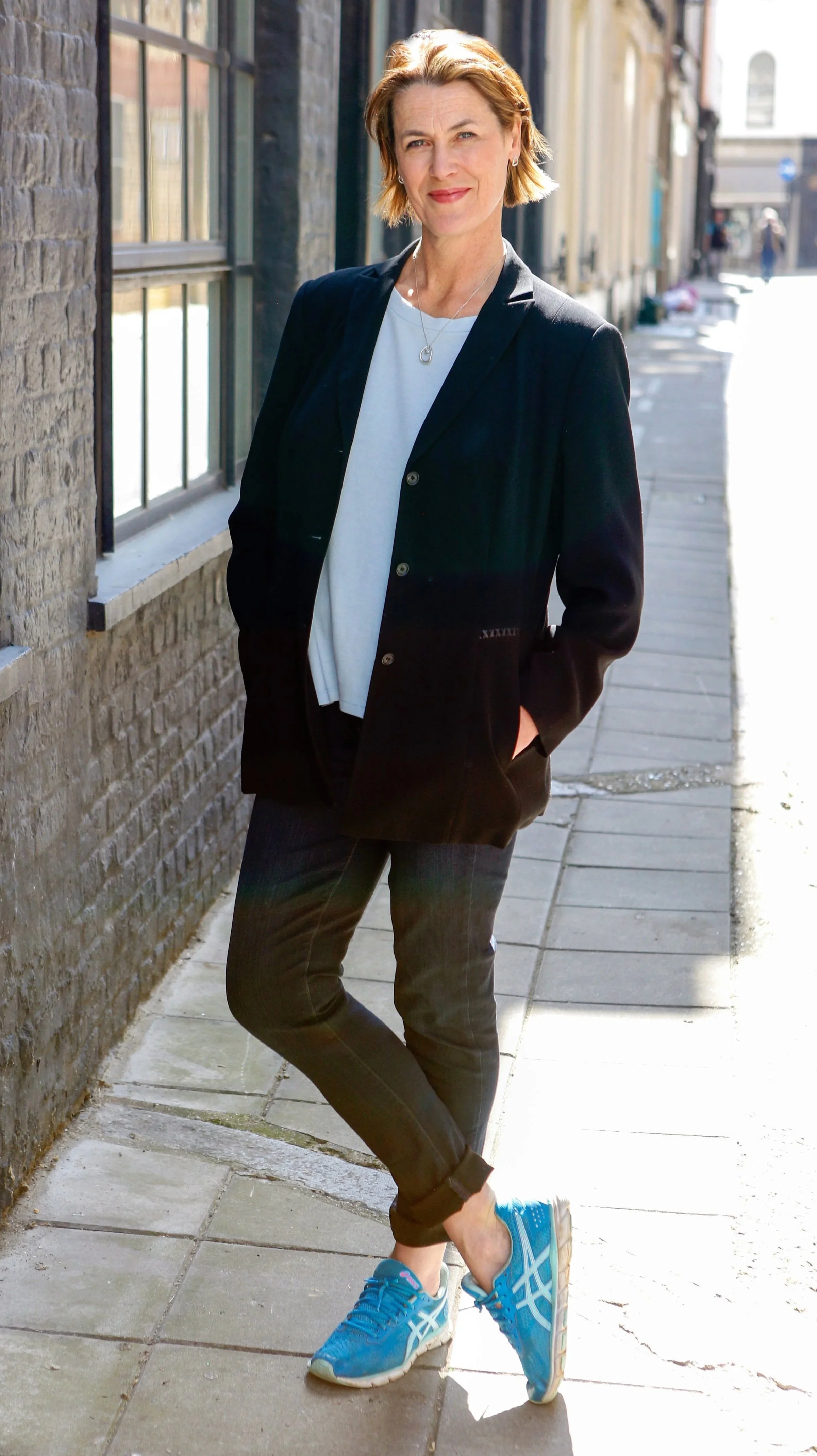
My work focuses on mind body connection to release habitual tensions that block the free flow of expression and breath, so that our voices become more resonant and dynamic.
Tackling muscular tensions, alignment issues and laryngeal imbalances is the first step in finding freedom for self-expression and vocal stamina.
I am a trainee Designated Linklater Teacher (DLT) and through Kristin Linklater’s image-based progressions and under the wonderful Mary Irwin’s mentorship, I know first-hand how to free the natural voice.
“Thank you for being a role model, guiding with wisdom and patience, a teacher sharing knowledge and insight, offering unwavering support and kindness.”
(Acting Student)
Theatre Mic Training
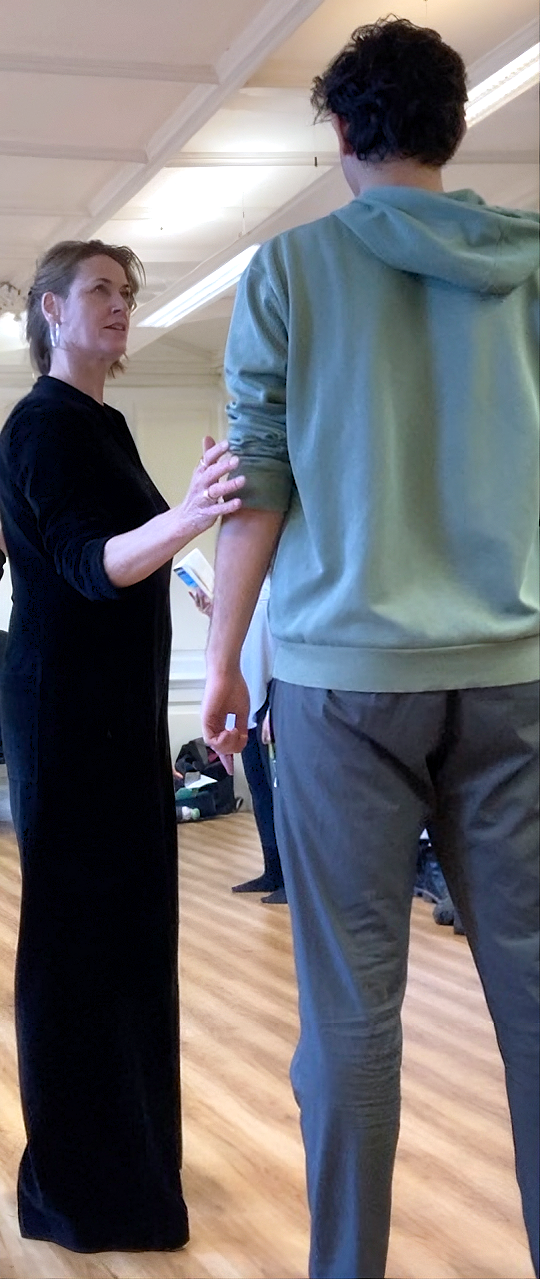
My particular interest and recent research focuses on vocal techniques actors should adopt when wearing head mics.
As theatres continue to become increasingly digitised it’s important to equip actors to work alongside emerging technology and offer them strategies and insights to work with ease with their personal mics.
There is evidence to prove that head mics affect breath control, physical release, vocal quality and resonance, which in turn affects how actors explore the full range of their performance.
I have identified real and practicable techniques that keep the voice resonant and dynamic.
Because mic work is less about volume and everything about everything else, my research reveals how best to implement mics into the rehearsal and production process readying performers to work alongside emerging technical innovation without becoming vocally minimised by it.
My article exploring these strategies has been published in “The Stage”
“You are a gifted teacher and I am most grateful for the insights and understanding you have given me.” (Acting Student)
If you would like to know more about my research and how best to work with mics please contact me.
Actor’s Voices
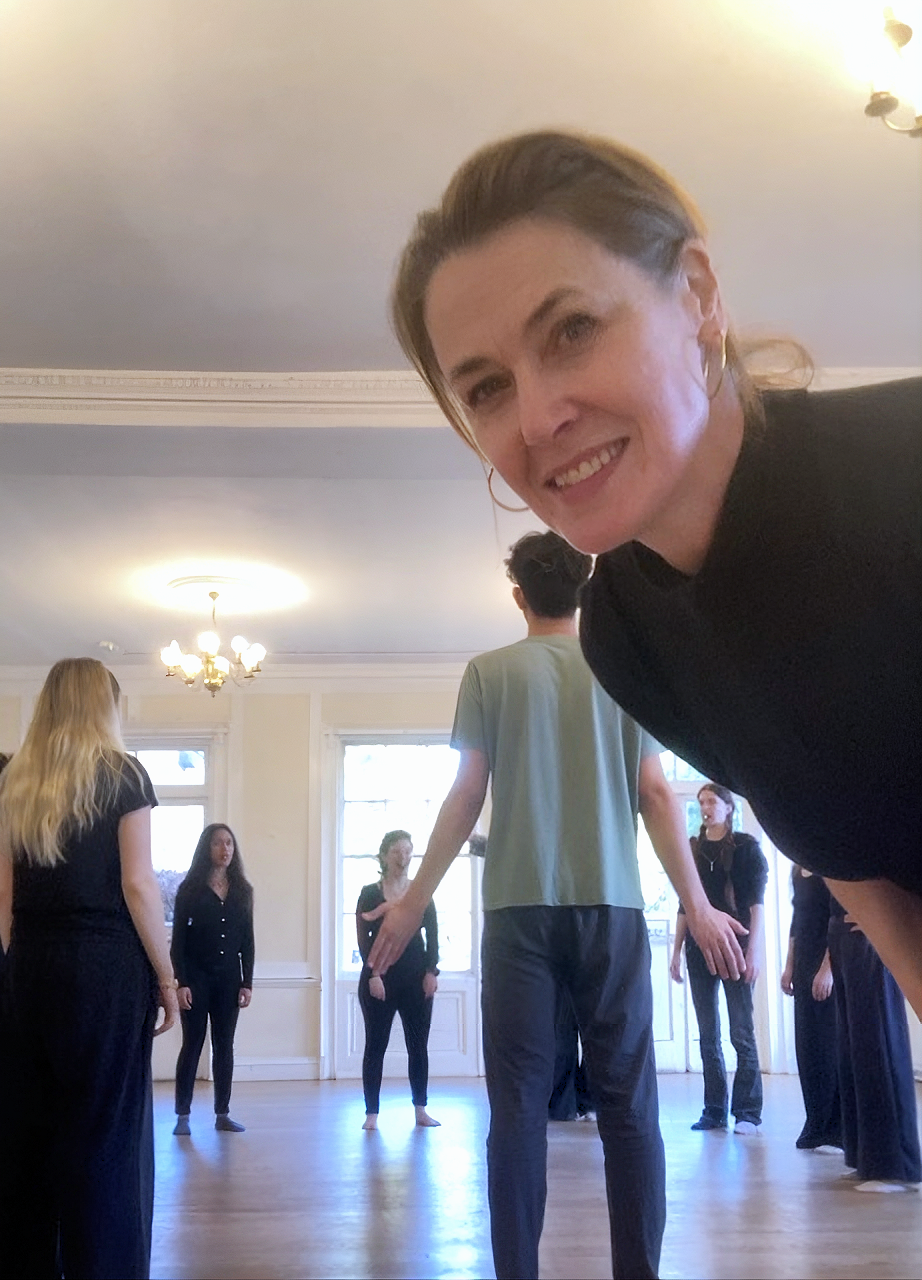
Voice is the essence of an actor’s craft.
The bridge between an inner and outer world, revealing unique responses to character, situation and script.
Actors’ voices have to be more flexible than ever before to adapt to audio booths, studios, microphones, fringe, stage, and amphitheatres.
There is great skill and commitment required in making yourself heard clearly.
It is an incredibly generous and inclusive thing to be able to do, and takes dedication and time to embed properly.
Placing sounds to thoughts allows the voice to make an impression, to change someone’s mind, to alter an opinion, to provoke discussion, to be a pinnacle for someone else’s change.
Articulation is inclusive. It frames thoughts and clarifies meaning - it doesn’t change you, it changes how much we hear of you. Good articulation is about becoming more of yourself, not less.
“You remain utterly approachable, making everyone feel at ease in your presence.” (Student Actor)
Show support and Text
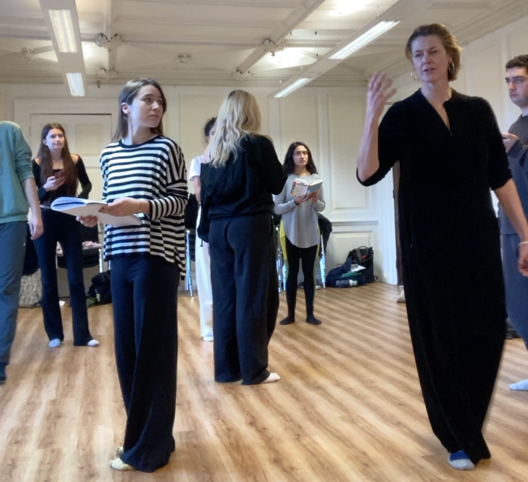
Vocal health as a voice practitioner is of optimal importance; I have great insight into developing character voices safely.
I want actors to feel comfortable in themselves and their language, and I work to find ways to honour what a director wants, whilst letting the actor find their own individual response to the language.
My belief is that drama is a vital expression of empathy and understanding, and the rehearsal space should be a safe place for people to create, challenge and grow.
My love of the profession and the craft of performing keeps me curious and analytical.
“Louise brought skill and understanding to working with my actors on ‘To See Ourselves’. She listened, gave perceptive and supportive notes and ideas, and gave them great confidence with her pre-show warm ups. Her long career as an actress gives her great empathy as a voice coach.” (Luke Dixon, Director)
Accent/Dialect
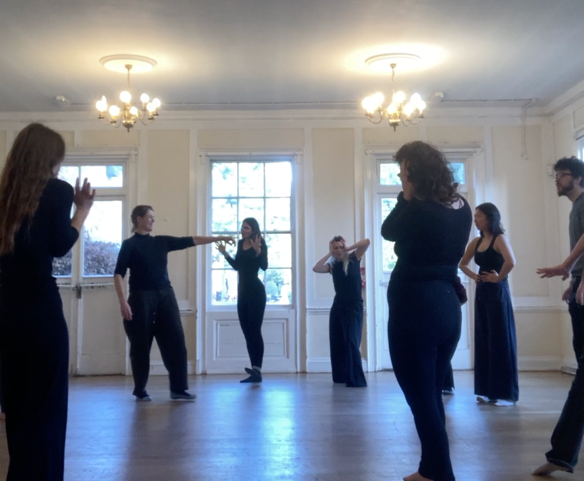
Our voices are inextricably linked with who we are – so working on accents can provide challenges as well as reveal new aspects of character explorations through vocal posture, prosody, and resonance.
Whether you are proficient at picking up accents quickly or want to focus on accent reduction, I have the tools that can guide you comfortably to explore the rhythm, pitch, vowel shape and specific articulation required to suit your proficiency and needs.