“I absolutely loved my LAMDA lessons with Louise. She made every lesson fun and really helped me grow in confidence and express myself. She understood me and adapted her teaching so everything felt easier to learn - from performance skills to preparing for exams. I learned so much and always looked forward to every lesson.”
(Anya, LAMDA student)
Drama and LAMDA
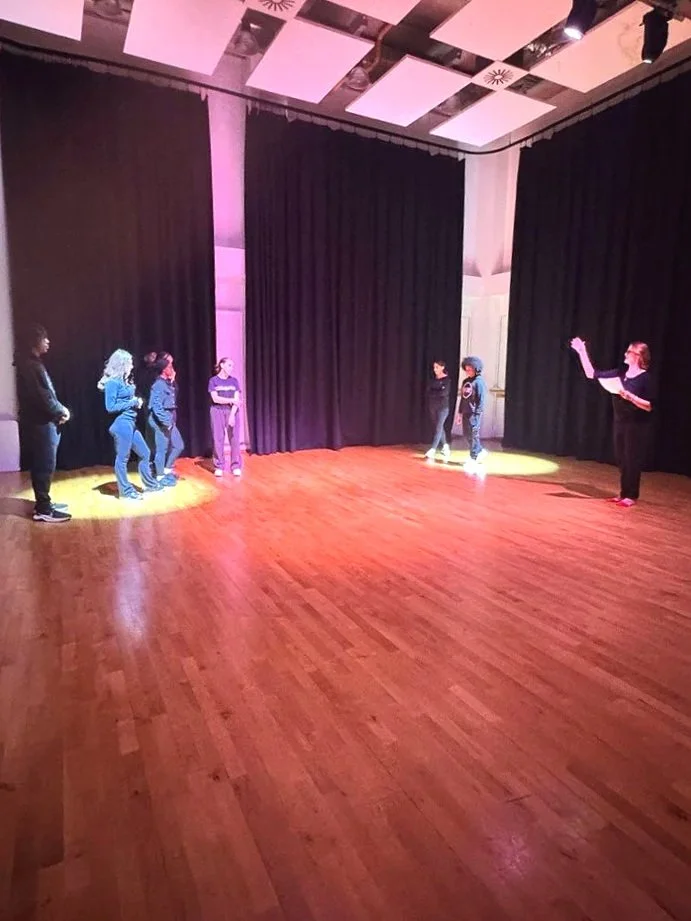
I run my own afterschool drama club, teach LAMDA Acting grades and run Shakespeare workshops to students of all ages.
I have seen the impact that this country’s decreased arts curriculum has had on my own children’s education as well as the students that I teach.
In an increasingly mediatized and competitive world, it is vital that we encourage and nurture the younger generation to articulate thoughts and explain processes.
Young people often feel frightened of speaking and being judged by their voices yet if we don’t use our voices we risk losing them.
I wanted Drama Club to be a fun place that encourages children to speak, use their imaginations, develop empathy, express feelings and opinions, roleplay situations, make friends across year groups and improve confidence in a kind, safe and supportive environment.
Drama helps children practice thinking quickly and talking publicly, they develop better physical control and balance, learn to look people in the eye, notice why people do what they do and play out situations that they haven’t yet encountered which helps them to make sense of their world.
“I like drama club because it is the one time where I can express myself without anyone judging me”
“I like drama because it gives me an opportunity to pretend to be someone else while being creative”
“I love drama because it is a time for me to act and not be me”
(Drama Club Students)
Shakespeare
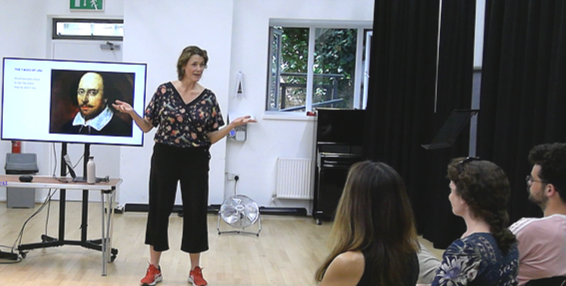
My passion for Shakespeare, and my work with the English Shakespeare Company and Soho Group initiated a great desire to find different ways to connect with and embody his text.
Shakespeare’s genius is that he speaks to every nation in every age because he shows us what it is to be human.
His language is a whole-body process - a gateway for emotional expression: the haptic sounds, rhythms, narrative and muscularity of his words encourage individuals to express something within themselves.
I find speaking Shakespeare’s words to be profoundly illuminating and healing.
Young Voices
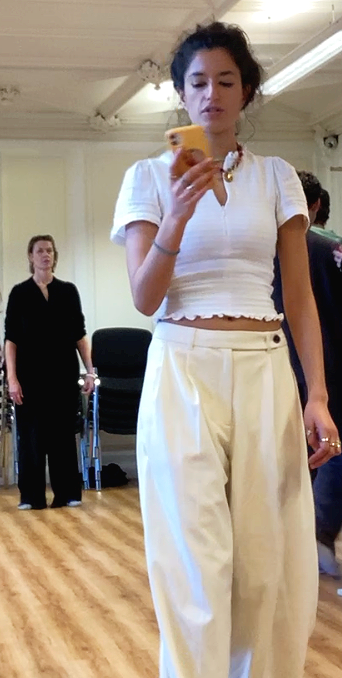
My work with young adults emphasises the importance of connecting emotionally with their voices to enrich and enliven their interpersonal and communication skills
Post-covid young adults have been hampered by the loss of many of the tools we used to take for granted.
I encourage students to find their flow by releasing muscle constriction in the face, lips, jaw and tongue that develops through scrolling and typing.
Self-esteem impacts posture, breath, energy and tension and vice versa and so addressing psychological issues through physiological solutions can unlock the free and natural voice and boost self-esteem.
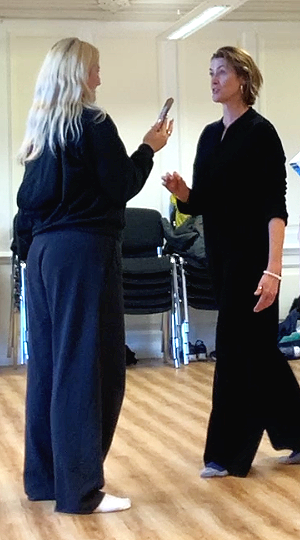
We’re living through a time where technology helps us bypass challenges for shortcuts and answers.
But mental resilience is built from working through those processes - often referred to as “difficult” or “hard.”
We must encourage the young to overcome their obstacles in order to build resilience, critical thinking and longevity.